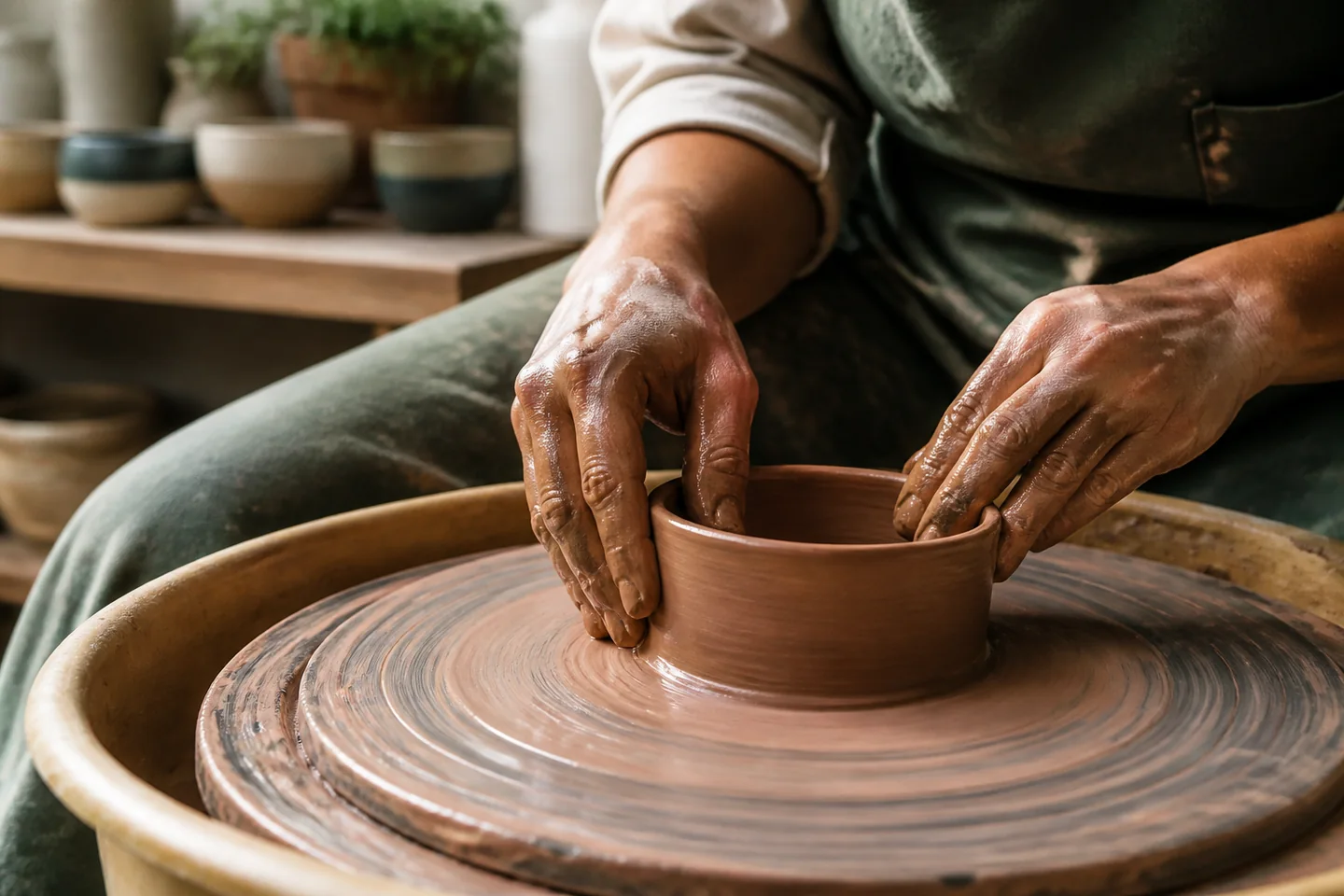
Tactile focus
Working with clay pulls your attention into the present moment.
Mold clay
Pottery combines focused handwork with the satisfaction of making a real object. It is tactile, forgiving and absorbing—even an imperfect first bowl feels unmistakably yours.
You need: A small piece of air-dry clay, a washable surface and the package instructions. No wheel required.
Roll a small ball of clay. Press your thumb into the centre without going through the bottom. Turn the clay as you gently pinch the walls between thumb and fingers. Set the dish down and smooth one rough edge; follow the package drying instructions.
You've done enough when: A small dish that stands on its own. Uneven edges are fine.
If a wall becomes thin, stop stretching it. A smaller, thicker dish is easier to handle. Air-dry clay is decorative, not a food or drink container.
Try it before signing up. Create an account when you want to save progress or an update.
People who want a tactile creative hobby and enjoy learning through their hands.
Working with clay pulls your attention into the present moment.
You can make objects that become part of everyday life.
Small improvements in control feel immediately rewarding.
Classes make it easy to learn alongside other beginners.
Build on your First Try with this short Starter Path. Mark each activity done at your own pace. Save an Update whenever you have something to remember.
Try one beginner technique for 15–30 minutes.
Create something small without aiming for perfection.
Save three ideas or creators you would like to learn from.
Repeat one skill and notice one improvement.
Write down what felt fun, difficult, and worth trying again.
Plan one simple session for next week.
Want a larger goal? A project keeps its steps and updates together. You can also keep practising and sharing updates directly from this hobby.
A useful first dish holds one key or a few clips. Its purpose is to practise shape and wall thickness, not achieve a perfect glaze.
When you share: Show the wet shape and the dry result. Mention where a wall cracked and how you would change the thickness.
Start the Project → See community projectsYou do not need to be an expert to join in. Share something you tried, ask a specific question, or leave a thoughtful reply on an update below.
Recent public updates about Pottery, with or without a project.
A first sketch, a small practice session or a question is enough to start a conversation. You can also keep your own progress private.
Sign in to add hobby →A project turns curiosity into a journey other people can follow.
 VoBaas
0 projects · 0 updates